I am Gareth Vaughan, a BACP Accredited Counsellor and Psychotherapist based in New Quay, Ceredigion. I offer bereavement and grief counselling in person in West Wales and online via Microsoft Teams to clients anywhere in the UK.
What is bereavement?
Bereavement is the experience of loss, most commonly the death of someone close to us. The word itself comes from an Old English root meaning "to be robbed," which captures something true: grief can feel like something essential has been taken without warning, leaving a gap that reshapes everything around it.
Grief does not follow a predictable path. You may feel numb, devastated, relieved, angry, or strangely ordinary, sometimes all in the same afternoon. There is no correct way to grieve, and no fixed time by which you should feel better. What grief counselling offers is a consistent, safe space where your experience, in all its complexity, is welcomed.
What kinds of bereavement do you work with?
Over more than 15 years of clinical practice, including work within a specialist bereavement service and a hospital-based cancer team, I have supported people through many different kinds of loss:
- The death of a partner, parent, child, sibling, friend, or colleague
- Sudden or traumatic bereavement, including accident, heart attack, or stroke
- Suicide loss, which often carries particular layers of guilt, anger, and unanswered questions
- Anticipated grief and end-of-life support, including when someone has a terminal diagnosis
- Cancer-related bereavement, losing someone after a period of illness
- Pregnancy loss, including miscarriage, stillbirth, and termination for medical reasons
- Loss of a pet
- Disenfranchised grief, losses that are not always socially acknowledged, including estrangement, relationship endings, or the loss of a hoped-for future
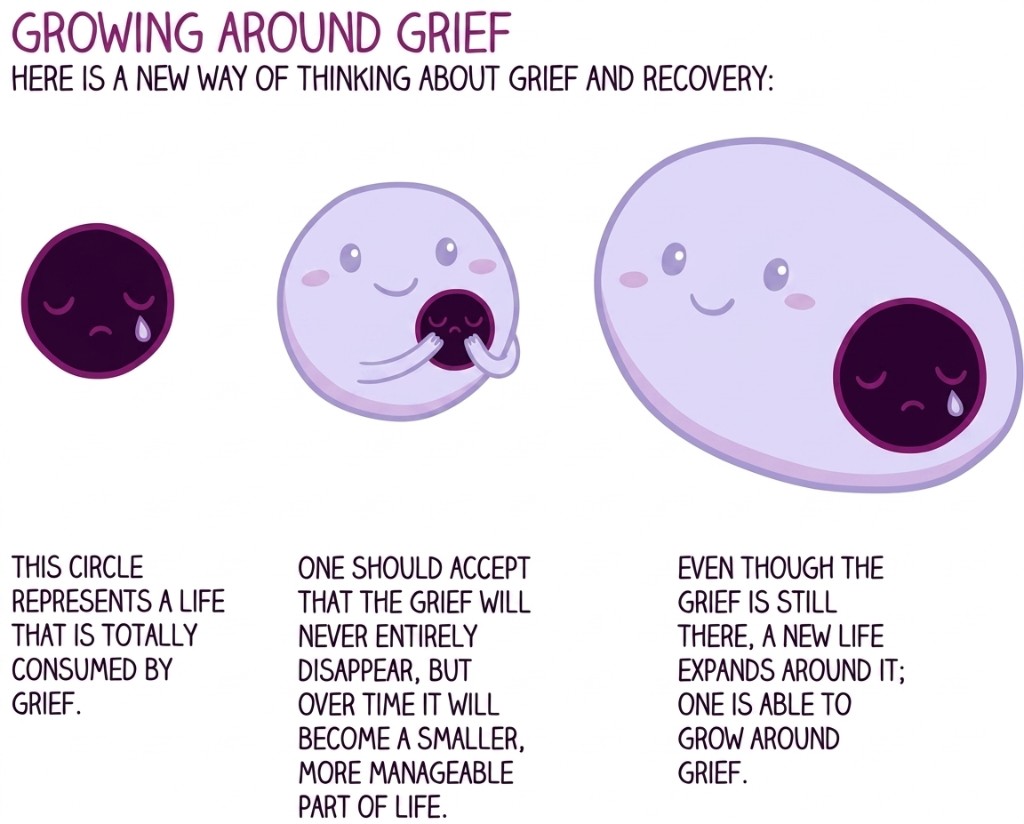
Bereavement counselling is not about moving on or letting go. It is about finding a way to carry your loss, to integrate it into your life rather than being overwhelmed by it.
In our work together, I can help you make sense of what you are feeling, explore the relationship you had with the person you lost, sit with the parts of grief that feel difficult to speak aloud, and find your own meaning in a changed world. I draw on Compassion-Focused Therapy (CFT), Acceptance and Commitment Therapy (ACT), and a Polyvagal-informed approach, always led by what feels right for you.